Preparing for high-stakes standardized exams like IELTS, TOEIC, or HSK is exciting at first, but it quickly turns into an exhausting battle against massive vocabulary lists.
Facing an intimidating mountain of 4,500 Cambridge academic words or thousands of Chinese characters often leads to immediate burnout. Most learners start with huge motivation, only to quit after two or three weeks because rote memorization feels like an endless chore.
You do not lack discipline or intelligence; you simply lack a system that breaks down massive goals into rewarding daily wins. If you want to know how to build a vocabulary study plan that actually keeps you motivated until test day, here is how gamification and Koki turn overwhelming exam prep into achievable daily progress.
The “Infinite Mountain” Trap in Exam Prep
The biggest reason candidates abandon their test preparation is cognitive overload.
When you download a 4,500-word Cambridge PDF or buy a thick vocabulary book, your brain perceives it as an endless, monolithic task. Looking at hundreds of unlearned pages drains your dopamine, the neurochemical responsible for motivation and drive.
Without visible milestones, your brain feels like it is working hard with zero return. To fix this, you must shift away from passive cramming and structure your preparation around micro-goals and gamified feedback.
Goal Chunking: How Micro-Goals Protect Your Motivation
Learning science shows that the secret to long-term consistency is micro-learning.
Instead of thinking, “I must conquer 4,500 IELTS words,” tell your brain, “I will finish one round of 15 words right now.”
Chunking massive exam requirements into bite-sized units provides three essential psychological advantages:
- Instant Dopamine Feedback: Completing a small round triggers a sense of achievement that fuels your desire to start the next one.
- Reduced Friction: Anyone can find 3 to 5 minutes to complete a quick set while commuting or waiting for coffee.
- Higher Retention: Small, focused review intervals prevent mental fatigue and enhance recall accuracy under exam conditions.
This micro-habit structure is the foundation of a sustainable daily vocabulary study routine.
How to Build a Vocabulary Study Plan with Koki Flashcards
Koki is built to take the dread out of test preparation by combining automated spaced intervals with gamified learning loops.
1. Break Giant Decks into Bite-Sized “Rounds”
Koki divides massive exam decks—such as the 4,500-word IELTS Cambridge collection—into manageable, bite-sized rounds.
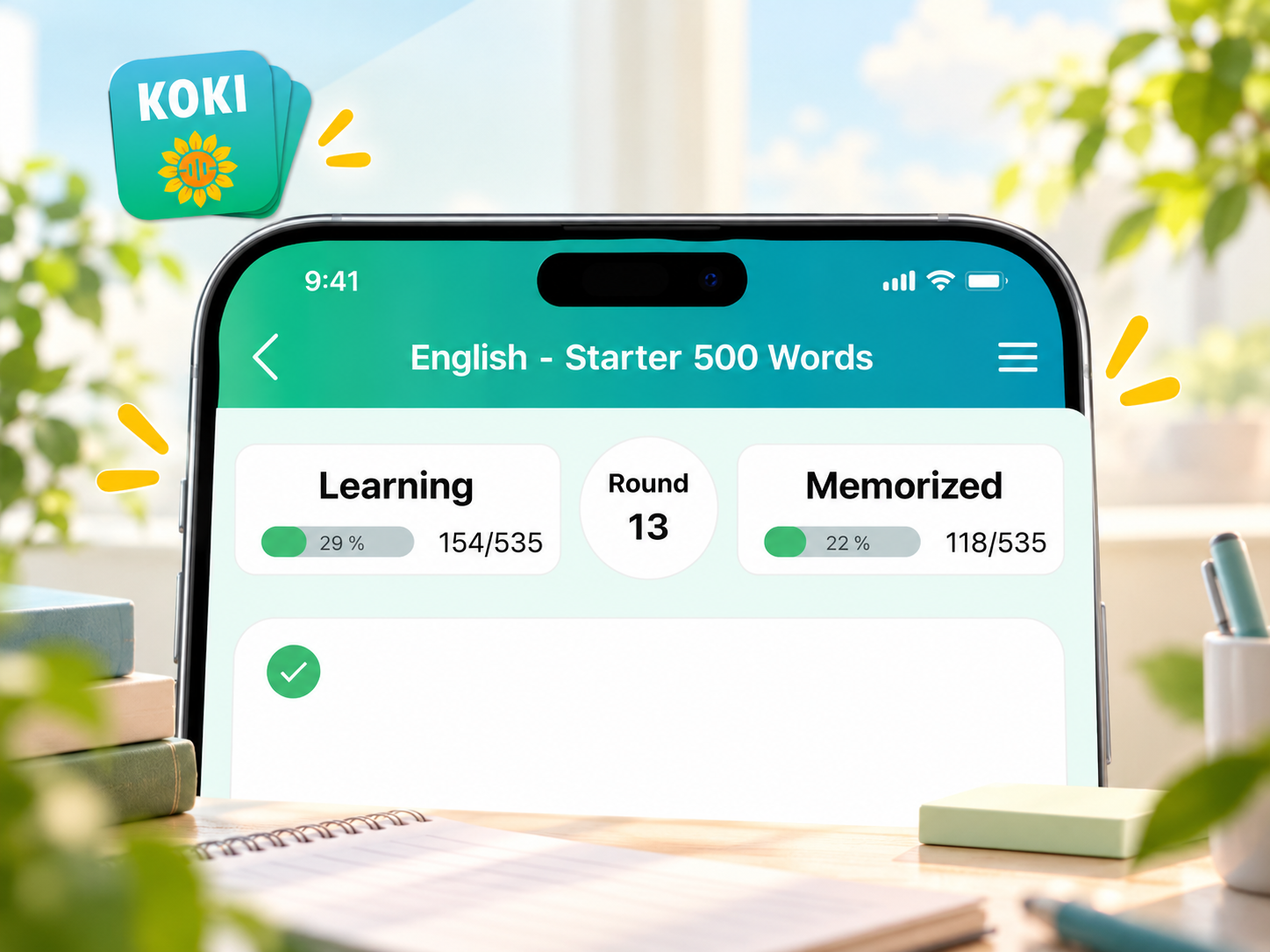
Instead of facing an infinite list, you only focus on a small cluster of cards in your current round. You swipe through 10 to 20 words, finish the round in a couple of minutes, and immediately see your round counter tick up. This chunked progression prevents cognitive exhaustion and makes daily study feel light.
2. Live Progress Bars (Learning vs. Memorized)
Nothing sustains motivation better than seeing concrete proof of your hard work.
At the top of every Koki study screen, dynamic counters show your exact progress: Learning cards versus Memorized cards. Every time you swipe a card to “Known”, you watch the percentage bar climb forward in real time. This immediate visual reward gives your brain the dopamine hit it needs to stay consistent day after day.
3. Rotate Modes: Flashcards Writing Quiz
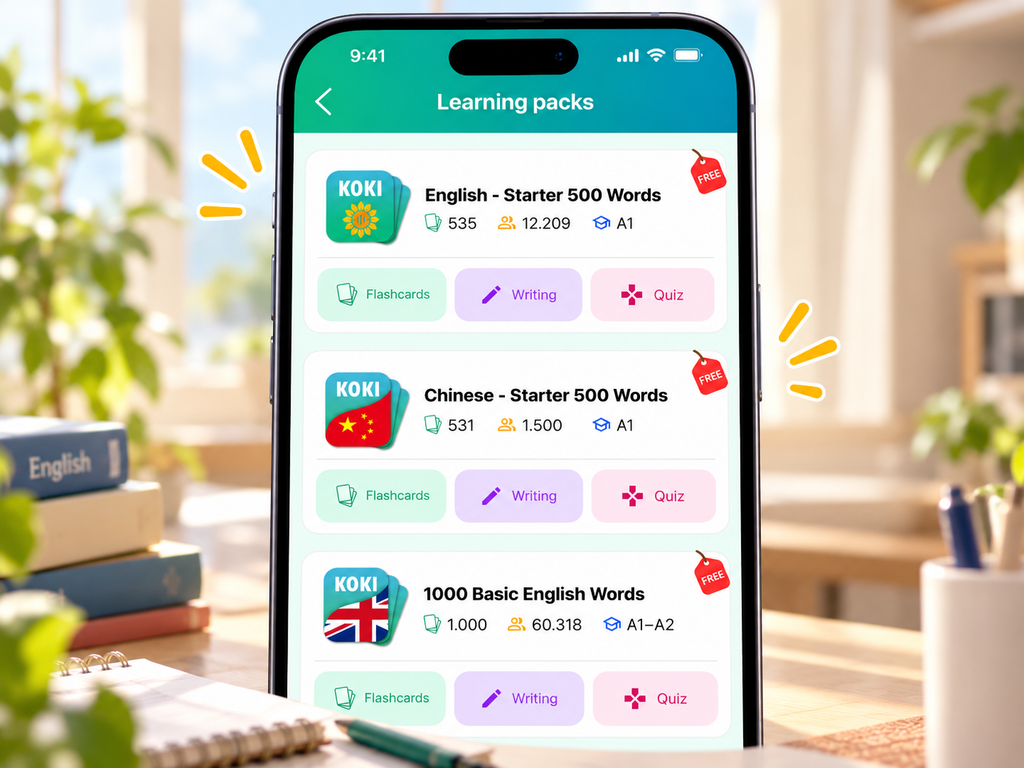
Staring at the same flashcards every single day causes boredom and sensory adaptation. Koki keeps your exam preparation dynamic through a 3-mode rotation:
- Flashcards (Recognition): Swipe through cards to build instant visual and auditory recognition of exam definitions.
- Writing (Spelling & Precision): Switch to Writing mode to type out the words letter by letter, cementing spelling accuracy for IELTS Writing and listening sections.
- Quiz (Reflexes & Gamification): Jump into interactive mini-games like Mixed Quiz, Word Matching, and Fill-in-the-Blank to test your recall under time pressure.
Rotating through these three modes shows you how to study ielts vocabulary without getting bored while simultaneously exercising all four language skills.
4. Automated Spaced Repetition Scheduling
You never have to waste mental energy deciding what to review next.
Koki embeds an automated spaced repetition study plan directly into its algorithm. The app automatically pushes difficult exam words into upcoming review rounds while letting cards you have already mastered rest, ensuring zero wasted study time.
Practical Rules for Your Exam Vocabulary Routine
To keep your study plan on track until your exam date, apply these simple daily habits:
- Commit to Rounds, Not Hours: Aim to complete 2 to 3 quick rounds per day rather than scheduling an overwhelming 2-hour cram session.
- Gamify Your Review: Use the Quiz mode as a daily challenge to test whether your newly acquired words have transitioned into active memory.
- Trust the Progress Bar: Watch your Memorized counter grow step by step; even 1% daily progress adds up to thousands of exam words over a few months.
Turn Exam Stress into Steady Daily Wins
Cramming for IELTS, TOEIC, or HSK does not have to be a miserable test of willpower against giant, lifeless vocabulary lists.
Knowing how to build a vocabulary study plan is about working with your brain’s psychology: chunking big goals into small rounds, rewarding yourself with visible progress, and alternating learning formats to stay engaged.
Download Koki Flashcards today, choose your target exam deck, and experience how rewarding steady vocabulary progress can truly be!